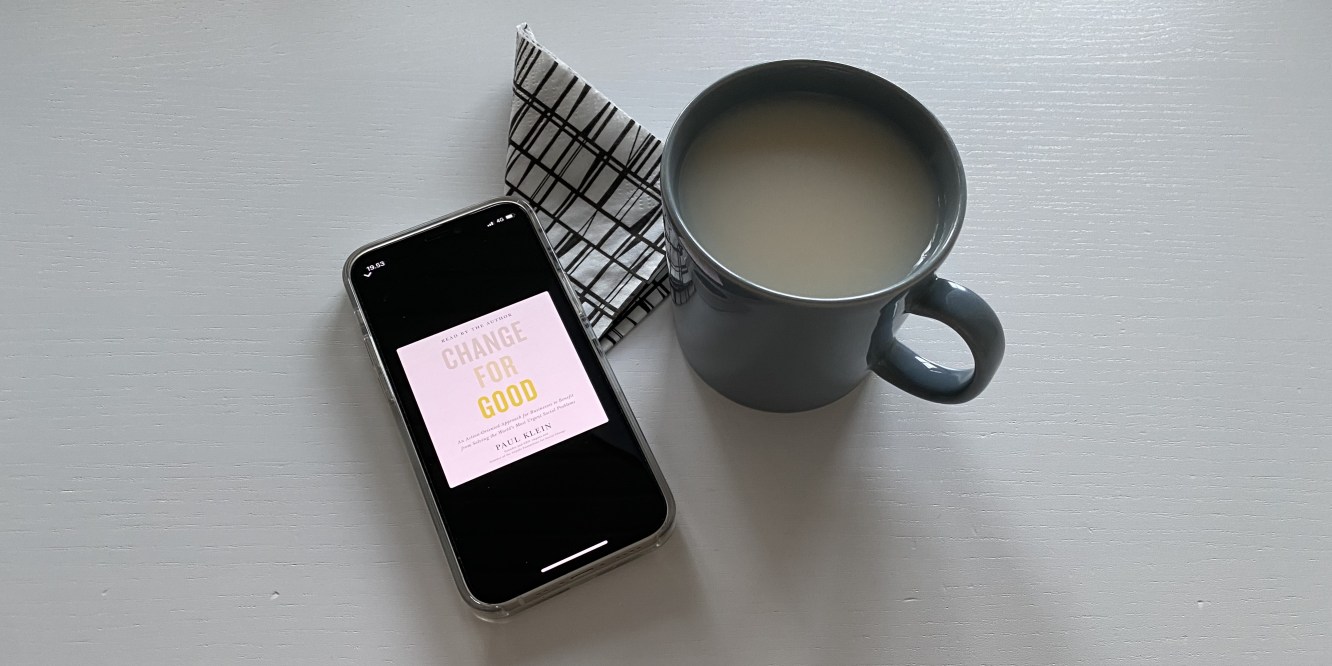
Most companies are responsible and irresponsible at the same time when it comes to social and environmental impact, writes Paul Klein in his new book Change for Good. The book brings to light the world’s biggest problems, most notably the eradication of poverty, and highlights the radical deterioration in that brought by the Covid-19 pandemic. Challenges are huge as one knows, but Klein manages to explain many of them with concrete examples.
Klein’s book is action-oriented and he emphasizes that companies need to do good for their own good. The book opens up various examples where companies have done a social impact and profitability has gone up because of that. There is a big difference though between bumper sticker thinking and philosophy, says Klein.
It starts with finding common ground with other companies and parties. Klein writes from the perspective of a Canadian, but as businesses are polarized into global and local it’s easy to understand the difference for example Amazon’s practices compared to Not-Amazon’s practices. There is no threat to the global Amazon with Not-Amazon, but a demonstration of the importance of small and medium-sized business communities to consumers as the pandemic has changed the way we are thinking.
The common denominators for change for good according to Klein are
1. Listening to people with lived experiences of the issues being addressed.
2. Using the principles of innovation, the fastest least expensive way to solve the problem. And
3. having the belief that this was the right thing to do even if there is no proof.
“Business is good for social change and social change is good for business”, states Klein. And because of the pandemic, investors have been even keener on the sustainable goals firms have, writes Klein.
For me, Klein’s thoughts about diversity are interesting, since the topic of our hidden thinking guiding us, has been pondering me for years. In my previous work in media, it was inevitable that for example recommendation systems shouldn’t be coded only by white young or middle-aged men, because of the bias it can generate unintentionally. A Film Coded bias is a watch worthy on the same topic, offered at least on Netflix.
The influence of one’s own life on the view is great. From my previous experience, at the media company, the number of different nationalities or cultural backgrounds in everyday life was very limited. The current work and the work before this, on the other hand, have been clearly international. For example, the working language is primarily English and all company materials from HR support etc. are also in English. People’s different take on life is taken into account. In many of the consulting companies offering software services with which I’ve worked for years, the situation is the same and the companies are very multinational. I feel that the worldview in everyday life becomes richer with diversity and inclusion of all kinds.
In Change for Good Klein is struggling with the slow pace of change. Bureaucracy is one thing slowing companies down, and so is the tolerance of risks. A good thing about the pandemic is that it has changed organizations to tolerate risk more, says Klein. Social good shouldn’t be about mitigating risks. It’s about an opportunity and reputational resilience, long-lasting solutions for the good of the company and for the good of the people and the planet.
Klein encourages people to start with concrete exercises to form a view of what social good looks like. It can be writing a letter, painting a picture or writing a press release in future to show what social good looks like then.
There are two sides present in the book as in reality. Klein brings numerous examples of moral cleansing and greenwashing, but also great achievements and concrete instructions like sprints resulting in blueprints and pilot programmes for social change. Change for good -conversations are one action that Klein and his colleagues have built. Start small, but aim for a big change.
Paul Klein, Change for Good. An action-Oriented Approach for Business to Benefit from Solving the World’s Most Urgent Social Problems. 2022.

 Small experiments and inspiration