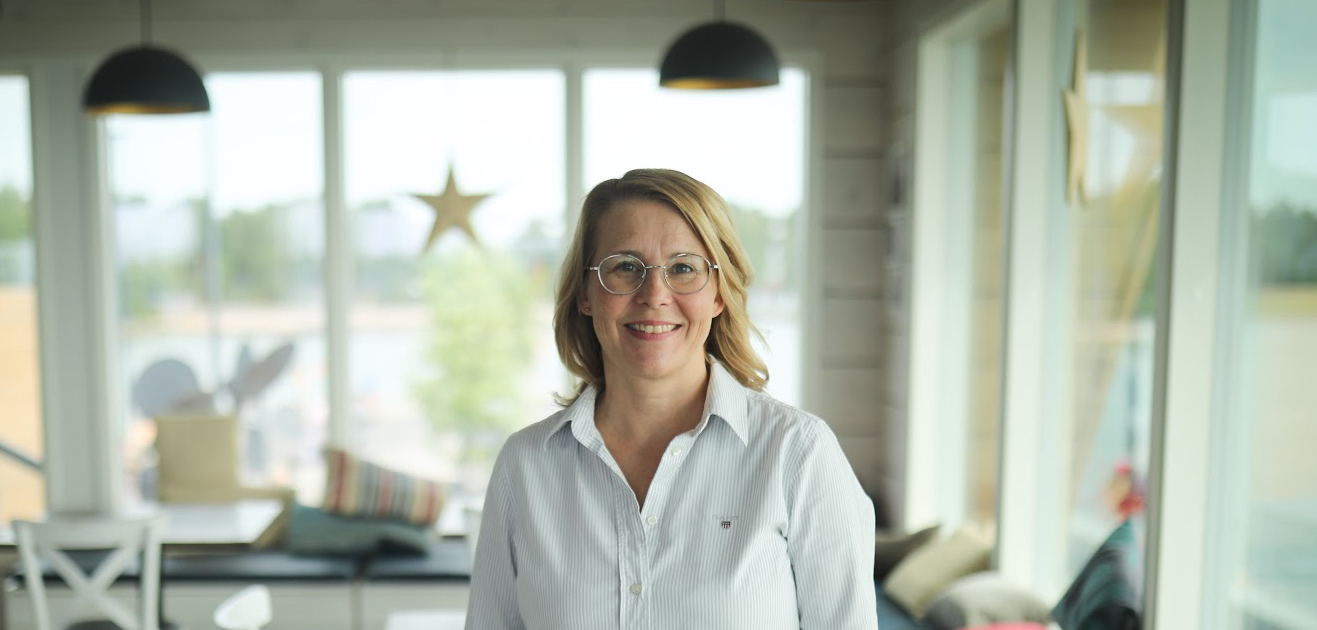
Learnings from experiments and continuous improvement: A. Start experimenting small, B. The importance of being supportive, C. It’s all about the people and D. The only thing worth optimizing is the speed of learning.
A. Start experimenting small
Start doing has been a good slogan for me for the past half a year. I’ve been constantly evaluating what experiments should be started and of course what things I should stop doing (classic Retrospective Starfish). Experimenting started with good speed also in VTT’s New Work program in the winter, with 45-minutes hour and Offline hour, which I’ve been enjoying in my own use as well. I feel that both of these experiments were great examples of thinking ahead and foreseeing that the spring would be quite heavy for a lot of people because of remote work.
Also, these experiments were examples of starting quickly. Starting can be buried under too much preparation and planning or it can be left undone because of all the other important work. When focusing on starting experimenting soon, it ensures that the progress begins.
Many other experiments have been going on in the New Work program and in my work with data economy as well, some bigger and some smaller. There is easily a tendency of magnifying ideas too big and them becoming projects instead of experiments. Keeping experiments small enough is important, because then you can also fail without having the pain, and keep the pace of new experiments rapid. That’s when you learn the most.
B. The importance of being supportive
New Work experiments have had a sparring group and evaluations have been done before and after the experiments. I’ve had the pleasure to be part of the sparring group and also asked to give inspirational speeches about experimenting and continuous improvement. Thank you Jenni Santalo and Kirsi Nuotto, two very inspiring people leading the New Work program for asking me to join. You have the ability to build trust that nurtures proper sparring to evolve.
Building an experimentation culture is a long-term job and it is important to maintain a supportive and courageous attitude. It’s been nice to have noticed that due to my long background with experimentation culture, I’ve been able to keep the wrong kind of criticism inside me and focus on the motivating side. It’s important not to jump into what’s wrong in the experiments, because there is always room for improvement in everything, but to focus on how to support and build continuous improvement with measurements and goals for the experiments.
Long-term goals are very important when building an experimentation culture. Goals need to be encouraging and challenging at the same time, to make the experiments ambitious enough. Barry O’Reilly writes cleverly about thinking big but acting small in his blog. Goals should engage everyone involved, and analyzing the results should support people for higher goals and better experiments next time.
C. It’s all about the people
The most important part is of course the people you work with. I’ve had the pleasure of having amazing people around me my whole career. I believe that uniqueness comes with combining abilities and building trust amongst people with very different skills and talents.
With experiments and cultural transformation, surprising people can prove to be the best agents of change. Working together with tricky challenges can give room for many types of capabilities to shine and speed up the learning. The important part is to listen to what people want and who are willing to share joint goals and enthusiasm. Efforts need to be made to identify, encourage and create common meaning.
How to engage the brightest minds in the company for the change and for driving experimentation culture? I find the New Work program and support from the top management to be a great catalyst for change. It also starts with just sharing your own learnings and co-creating better everyday working life with your colleagues. You don’t need permission or a program to start. One way is to create and improve Kanban boards for working better together and for encouraging sharing of learnings in demos and retros (read a previous blog). My personal goal is to build a fun place to work at the same time. The trust and the joy of working together and achieving challenging goals with people is the best thing.
D. The only thing worth optimizing is the speed of learning
It’s important to create a culture where learnings are shared constantly in everyday life. Continuous evaluation and measurement help to understand the progress, and guides how to go further, whether to stop or increase the volume.
The key is to optimize the speed of learning. This is something I’ve studied a lot with the unfortunately already deceased brilliant Esko Kilpi and ex-colleague Ritva Leino when building strategies and measurements in a media company for many sorts of experiments, multimedia projects, and complex digital services. Kilpi emphasized the fact that optimizing the speed of learning is important in all levels of development from experiments to teams, and to the company level. This has been one of my key drivers for many years and I haven’t come across more suitable ones. With this, all the other aspects of success will follow, as long as you keep the customer and the end-user in the heart of your actions.
Sharing is a very important part of speeding up learning, you don’t want to make the same mistakes again and the more people you have sharing their learnings when relevant the more mistakes you are able to avoid. Sharing practices and tools can help you enormously and recent sharing is from another brilliant ex-colleague Mirette Kangas in Yle Lean Culture Toolkit 2.0. I’ve had the pleasure of co-creating experimentation culture with Mirette and I strongly believe in her philosophy of sharing learnings from people to people but also from company to company.
Of course, there are many levels of sharing. The level of trust amongst people is quite often at its best when there is a group of people less than 10 engaged to the same long-term goal. Trust allows rigorous discussion and questioning, and the possibility of the solution rising to the next level. Speed of learning can be very fast when people are willing to reveal their doubts and failures, and willing to support and help each other.
Working together with brilliant people is the thing that gives me joy. Setting up nearly impossible goals and striving there together. I’m grateful for the past and present brilliant minds near me, and for all the unexpected new possibilities and acquaintances that seem to pop into my life. Luckily it looks like with vaccinations Covid-19 is getting smaller and the summer holiday is a great time to meet new people in docks, events, and of course online. Please send me a message if you want to share and figure out something new, and have a happy summertime!
Photo by Sami Kallinen

 Small experiments and inspiration