Working together brings joy and continuous learning good results.
Many highlights this spring have been with the people who have been enthusiastic to start experimenting. Luckily experimenting in many ways is encouraged at VTT by the New work -program. I suggested in the program’s Leadership stream that we would do a Visual leadership experiment with two Kanban boards, but we ended up having eight Kanbans in the experiment. The teams vary from my own Data intensive economy team, to Corporate foresight and to Future consumer -team.
It’s been very interesting to see how different people react to the idea. Many of the over 70 people taking part in the experiment haven’t used online whiteboard Miro before. Likewise, most people haven’t used Kanbans, even though some have used Scrum. It’s been very helpful to use Whitmore’s great article when talking about the differences in scalable agile methods.
There has been some people hesitating about Kanbans and Miro, but even more, there’s been shared excitement and willingness to experiment in the air!
Each of the sessions has had a similar agenda for an hour and a half or two hours. I’ve asked people to sign in to Miro the day before so that they can ask for help beforehand if needed. The agenda begins with a welcome from the Kanban owner, either the team leader or a portfolio owner, short instructions on how to use Miro, and a warm-up exercise.
Then I had a 15-minute presentation about the philosophy and background of Kanban work. It emphasizes improving transparency and sharing, faster learning-loops, experimentation mindset, and joy. Kanbans are heavily influenced by my previous learnings and work at Yle and Yle Lean Culture Toolkit created by Mirette Kangas. But they are VTT’s Kanbans with their own interpretations and they reflect the company goals and purpose.
With all the visual leadership kanbans the emphasis is on working together. The main focus is not on sharing information, it’s on finding better ways to work together. To see each other behind the screens and to listen to find out the sweet spots of co-operations.
Before jumping into the Kanban work and defining swimlanes, everyone did an individual retrospective Starfish about ways of working, from their point of view and expertise. Then findings have been shared with the group in two minutes. Using a timer in Miro helps everyone to select the most important things and for the group to stay focused.
Workshops encourage you to start the Kanban work from common ground, the swimlanes and phases don’t have to be the right ones straight away. In the first workshop, a good result is to share the mindset and goals for the Kanban, defining the first versions of swimlanes and phases, and maybe to produce some post-its for epics/tasks relevant for sharing.
You can prioritize swimlanes with an order or use colors in many ways to support visual leadership. You can use red post-it’s to mark things that you know that is hard to do. People will notice if red post-its are missing and if they are concentrating on too minor things or too easy to do. Or you can use colors to point individuals, things overlapping swimlanes, or whatever you want to get attention.
After the first workshop people can start their own thinking for the agreed next daily, weekly or biweekly. The visual leadership kanbans in this experiment are for leading subjects like strategic challenges, teams, and networks, and most importantly they are for people leading themselves.
I’m keen on seeing how the kanbans will work. For all teams, they might not be the perfect solutions and that’s why I love that it’s an experiment. Each kanban owner is after the joint start responsible for empowering people and finding the best ways. Where the kanbans will evolve, is up to the teams to guide and decide. I can help further developments with the kanbans and with targets, measurements, demos, retros, and faster learning-loops if needed.
I can already see the results of new ways of working and continuous learning. After the first session, I asked people to vote with classic thumbs-up, to the side, or down, and over 90% of thumbs were up. In just some weeks Kanbans have scaled into shared practices, language, and working together.
Kanbans bring people together regardless of where they are in Finland or in the world. And because these kanbans have started in the Covid-19 era, we are all equally remote and with sometimes quite desperate need for other people and joy!
The joint experiment for working better together, helping each other and for happier workplaces has started. It would be nice to hear your experiences about visual leadership and co-creation, please contact me here, Instagram, Twitter, or LinkedIn.
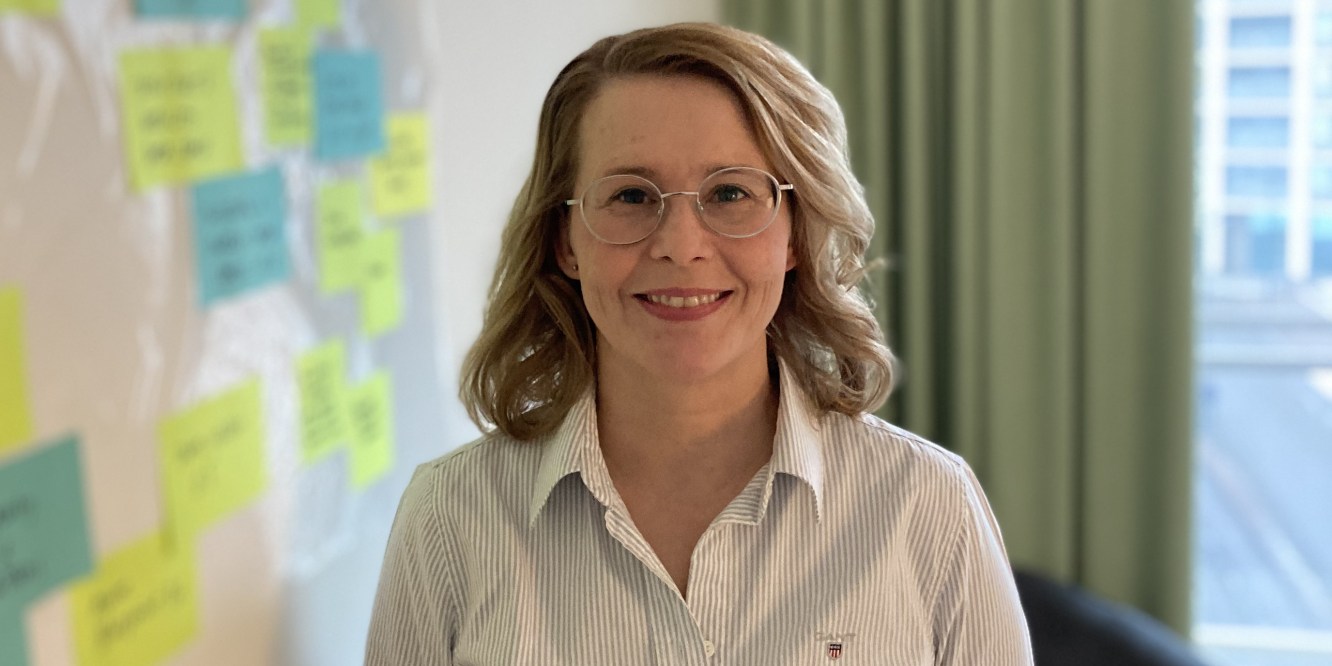
Photo by Riikka Rissanen

 Small experiments and inspiration
One Reply to “Visual leadership Kanbans in action”