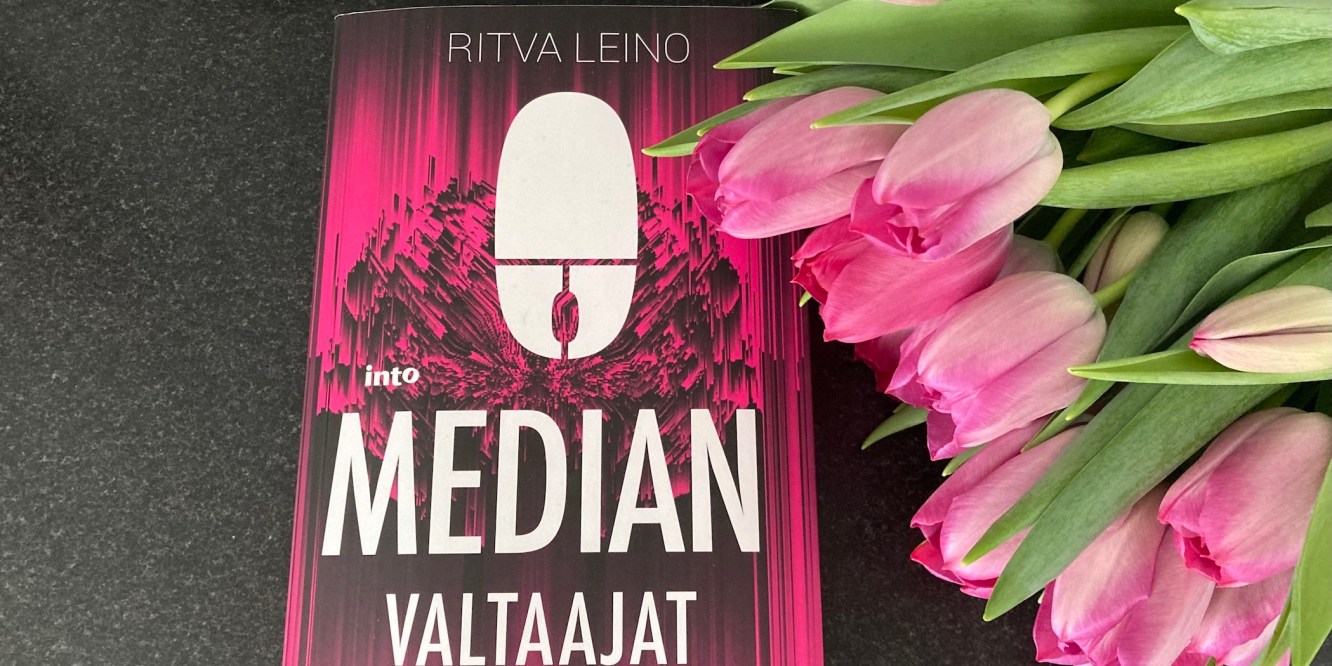
Median valtaajat (Media invaders) tells an intriguing story of traditional media’s changed role under tech giants’ thumb. Book encourages conversation about changes in media, content, usage, business models and the whole media ecosystem. The role of tech companies has been huge, but at least in Finland, “we have adjusted silently”, says the author Ritva Leino. January 2021 at the congress of the United States opened many eyes.
Leino provides numerous examples on how the user is by no means the king to the tech giants. “We have become practically their subservients.” Access to the user data changed the game. “With the promise of transparency and freedom, users were sold to advertisers’ “, Leino writes. Global giants have platforms on which traditional media companies have become dependent. Leino argues that the media power shifted from traditional media to global tech giants.
A profound international perspective is guiding the way in the whole book. Leino analyses multiple streaming services, many series such as the Wire, Game of Thrones and Black Mirror, but also the international view in early starts, understanding algorithms, and the changing needs of individuals. What could be wider in the book is an analysis of the chinese influence on the global market.
Findability is still a huge challenge for media companies and the shortage of sign-in data is holding companies in Europe back. Netflix is fighting harder in many areas compared to the traditional media companies. “The competition between the streaming companies aims at market dominance”, writes Leino.
Leino analyses tv-channels changed roles attentively, and because of her personal involvement she digs deep in culture channel Teema. She also raises the problems with measurement with traditional viewing panels, which is my own passion as well. With Teema the success was partly based on the fact that the viewing figures were replaced with qualitative research and user understanding.
Eventually standardizations of channels won the handpicked curation in Teema, and also diminished the amount of qualitative research, and ended the whole era. About the metrics, I would say that the old world market share figures don’t help the media companies with the transformation, but hold them harder to stick to the traditional ways of working.
In media houses it’s also been a question of the quality of co-operation between the traditional television side and internet supporters. ”Utilizing the web to improve findability of content is just rhetoric unless you make it part of your users’ media experience”, explains Leino.
It’s not about copying, it’s about innovation and learning. “There are an endless number of obstacles to change and to create something new. Our mindsets are such that we easily try to see and do things according to old, familiar patterns.” That’s why experimenting needs all the support.
The book is an honest description about the slow pace of change in organizations and traditional media companies, but it’s also about Leino’s own path and development together with colleagues. The author’s own voice and experiences, as well as enormously extensive networks and intellectual property, wing the book into immense reading pleasure.
While the picture of the media companies situation is gloomy, Leino finds many positive ways such as people involvement and interaction. “Participation prevents alienation and increases social well-being, even happiness and the ability to value others.”
“User-centric design and identification of user needs is also the core and key to participatory media design and product development”, Leino says and I couldn’t agree more.
I’ve been very privileged to be able to work with Ritva Leino for nearly ten years. The torch she has been caring for all these years has been the light also in our joint path. And this journey is still going strong even though we are working in different companies now. I have always said that Ritva Leino is miles ahead from other people with her futuristic mind. This book proves without a doubt that she is one of greatest thinkers in the media landscape.
“Not only will the future happen to us, we will do it ourselves.” This rousing book should not be left unread by anyone working in the media ecosystem.
Ritva Leino: Median valtaajat. Teknologiajätit ja käyttäjät ratkaisevat television tulevaisuuden. 2021
(Media invaders. Tech giants and users will decide the future of television)
Can be bought in Finnish Intokustannus.

 Small experiments and inspiration
2 Replies to “Inspiring book: Median valtaajat”